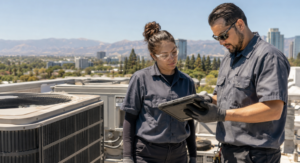
San Jose’s next stretch of extreme heat will test more than air conditioners. It will test wireless networks, smart thermostats, cloud platforms, mobile applications, building automation systems, cybersecurity safeguards, and the quality of the data moving between them. Heating and cooling equipment has become deeply connected to information technology, turning dependable IT infrastructure into an essential part of indoor comfort.
For local HVAC companies, this change creates an opportunity to deliver faster service, prevent equipment failures, improve energy efficiency, and build stronger relationships with customers. It also introduces new responsibilities. Connected equipment must be installed correctly, protected against unauthorized access, monitored consistently, and supported by people who understand both mechanical systems and digital technology.
As California IT news continues to focus on artificial intelligence, connected devices, energy management, and cybersecurity, HVAC contractors have a clear reason to pay attention. The businesses that prepare before temperatures climb will be in the strongest position to serve customers when cooling systems are under the greatest strain. ☀️
Modern HVAC Systems Depend on Reliable IT
Traditional air-conditioning systems relied mainly on mechanical components and basic electrical controls. Modern systems may include Wi-Fi thermostats, wireless sensors, variable-speed equipment, mobile applications, cloud dashboards, remote diagnostic tools, and automated maintenance alerts. These technologies allow contractors and property managers to see how equipment is operating without waiting for a complete failure.
The relationship between HVAC and IT is especially important for commercial properties. Offices, medical facilities, retail stores, warehouses, schools, and technology campuses may use building automation systems to coordinate heating, cooling, ventilation, lighting, and access controls. When the network supporting that system becomes unstable, the mechanical equipment may continue operating with limited visibility or lose access to important automated functions.
The broader concept is part of the Internet of Things, which connects physical devices to networks so they can collect, exchange, and respond to data. In an HVAC setting, those devices can include thermostats, temperature sensors, humidity sensors, air-quality monitors, controllers, compressors, and energy meters.
Before the next heat wave, every connected component should be identified and documented. HVAC companies should know which devices are online, how they communicate, who can access them, and what happens if internet service is interrupted.
Remote Monitoring Can Prevent Costly Summer Breakdowns
Extreme heat places sustained pressure on cooling equipment. A system that operates normally during mild weather may struggle once temperatures remain elevated for several consecutive days. Dirty coils, restricted airflow, failing capacitors, refrigerant problems, worn motors, and inaccurate sensors can quickly become major service emergencies.
Remote monitoring gives contractors an earlier view of developing trouble. A connected system may detect unusual runtime, declining cooling performance, excessive energy use, temperature differences, pressure changes, or repeated short cycling. Technicians can use this information to evaluate the likely cause and arrive with appropriate tools and replacement parts.
The National Institute of Standards and Technology lists an HVAC commissioning tool designed to support performance analysis for building systems. This type of technology reflects a larger movement toward data-assisted maintenance and more precise system evaluation.
For a San Jose HVAC company, remote diagnostics can make summer scheduling more efficient. Technicians can prioritize urgent problems, reduce unnecessary visits, and contact customers when system data indicates that maintenance should occur before a failure. Customers receive more dependable service, while contractors gain a practical way to manage heavy seasonal demand. 🔧
Cybersecurity Must Be Included in Every Connected Installation
A smart thermostat or building controller is not only an HVAC component. It is also a network-connected device. Weak passwords, outdated firmware, unnecessary remote-access features, shared accounts, and poorly configured routers can expose connected equipment to digital threats.
The risk becomes more serious in commercial buildings where HVAC controls share infrastructure with computers, cameras, access systems, or business applications. A vulnerable device may provide an entry point that extends beyond temperature control. Protecting connected HVAC equipment therefore requires coordination between the HVAC contractor, property owner, facility manager, and IT provider.
The federal Cybersecurity and Infrastructure Security Agency emphasizes the importance of maintaining an accurate inventory of operational technology assets. For HVAC businesses, that means recording device models, serial numbers, network addresses, software versions, account owners, access permissions, and maintenance dates.
Every installation should begin with unique passwords and the removal of default login credentials. Remote access should be limited to authorized users, firmware should be updated according to manufacturer guidance, and old accounts should be disabled when employees or vendors change. Commercial properties should also consider placing building controls on a separate network segment rather than connecting them directly to the primary business network.
These practices should become part of the standard installation checklist. Cybersecurity is easier to establish during installation than to repair after a connected system has been exposed.
Smart Thermostats Need Proper Configuration
Installing a smart thermostat does not automatically create an efficient building. The device must be compatible with the equipment, configured for the correct system type, connected to a stable network, and programmed around the property’s actual schedule.
Incorrect settings can cause comfort complaints, excessive equipment cycling, unnecessary energy consumption, or reduced system performance. Commercial settings require particular care because occupancy patterns may change throughout the week. A thermostat programmed for a continuously occupied building can waste energy after hours, while aggressive temperature setbacks may force equipment to work too hard during morning recovery.
The California Energy Commission notes that smart thermostats can provide remote control, energy-use data, compatibility with other connected devices, and support for grid flexibility during periods of peak demand. These benefits depend on careful setup and ongoing review.
HVAC contractors should verify scheduling, temperature limits, staging controls, humidity settings, fan operation, alerts, and recovery behavior. Customers should also receive clear instructions covering mobile access, account security, schedule adjustments, and manual operation during a network outage.
California’s Electrical Grid Adds Another Layer of Urgency
Heat waves affect individual air conditioners and the electrical grid supporting them. When millions of cooling systems operate at the same time, electricity demand rises sharply. California’s grid managers must continuously balance demand with available generation, storage, imported electricity, and other resources.
The California Independent System Operator projects continued growth in peak electricity demand. Its planning information underscores the importance of adding resources and maintaining grid reliability as California’s energy needs increase.
Connected HVAC controls can support this effort by reducing unnecessary operation during peak periods without abandoning comfort. Pre-cooling a well-insulated building, adjusting temperature settings slightly, coordinating multiple zones, and using variable-speed equipment effectively can reduce strain while maintaining acceptable indoor conditions.
HVAC companies should understand how demand-response programs and time-of-use electricity rates affect their customers. Contractors do not need to become utility-rate consultants, but they should recognize how equipment selection and control strategies influence operating costs during high-demand periods.
Data Quality Determines Whether Automation Works
Smart HVAC technology depends on accurate data. A damaged sensor, poor device placement, weak wireless signal, incorrect equipment profile, or software integration error can lead to misleading conclusions. Automation based on faulty data may waste energy or create uncomfortable conditions.
Sensors should be installed away from direct sunlight, supply-air drafts, heat-producing equipment, exterior doors, and other conditions that distort readings. Commercial systems should be checked for conflicting commands between local thermostats, equipment controllers, building automation software, and cloud platforms.
The U.S. Department of Energy supports research and development involving efficient building technologies and advanced controls. The continued emphasis on smarter buildings shows why data management is becoming part of modern HVAC work.
Companies should establish realistic alert thresholds and review them after installation. Too many alerts can cause users to ignore important warnings, while settings that are too broad may allow serious problems to develop unnoticed. Useful alerts identify conditions that require a specific response.
Indoor Air Quality Monitoring Deserves Attention
During a heat wave, buildings often remain closed for long periods while air-conditioning systems recirculate indoor air. Ventilation, humidity, filtration, and equipment cleanliness can all affect the indoor environment.
The U.S. Environmental Protection Agency provides guidance on indoor air quality and the pollutants that may affect homes, schools, and commercial buildings. Connected monitors can help track temperature, humidity, carbon dioxide, and certain airborne contaminants, but the readings must be interpreted responsibly.
An air-quality monitor cannot replace professional inspection or laboratory testing. It can reveal patterns that deserve attention, such as humidity rising at certain times, ventilation changing with occupancy, or indoor conditions deteriorating when filters become restricted.
HVAC companies can add value by helping customers understand what their monitoring systems measure and what the readings mean. Clear explanations prevent customers from overreacting to normal fluctuations while ensuring that persistent problems receive proper attention. 🌬️
Every Connected System Needs an Offline Plan
Cloud services, mobile applications, and internet connections can experience outages. A building should not lose essential cooling simply because a router fails or a vendor’s online platform becomes temporarily unavailable.
Before summer, technicians should confirm that equipment can continue operating through local controls. Property managers should know how to adjust temperatures manually, restart approved devices, identify network failures, and contact the correct support provider. System documentation should include equipment information, control locations, account ownership, warranty details, network requirements, and emergency procedures.
Backup power also deserves consideration for critical control components. Medical facilities, server rooms, senior living communities, and other temperature-sensitive properties may require more extensive resilience planning. The appropriate solution depends on the building, equipment, occupants, and consequences of interrupted cooling.
HVAC and IT Providers Should Coordinate Before an Emergency
Many service problems last longer than necessary because responsibility is unclear. The HVAC contractor may assume the network is working, while the IT provider may assume the thermostat or controller is functioning correctly. The property manager is left between two vendors during the hottest part of the day.
Coordination before a heat wave can prevent that confusion. HVAC companies should document device requirements and approved network settings. IT providers should understand which devices control essential building functions and avoid making network changes without evaluating the effect on those systems.
A shared contact list, basic troubleshooting procedure, and defined escalation path can save valuable time. Larger commercial customers may benefit from a short preseason meeting involving facilities staff, HVAC technicians, and IT personnel. That meeting can confirm system access, alert recipients, vendor responsibilities, and emergency contacts.
Conclusion
The next San Jose heat wave will place heavy demands on cooling equipment, electrical infrastructure, service technicians, and the digital systems connecting them. HVAC companies that treat IT as part of the complete comfort system will be better prepared to identify problems early, protect connected equipment, manage customer expectations, and respond efficiently.
The essential preparation includes documenting connected assets, strengthening passwords, updating firmware, testing remote monitoring, checking sensors, confirming local controls, reviewing alert settings, and coordinating with IT providers. These steps improve reliability without losing sight of the mechanical fundamentals that keep buildings comfortable.
California’s HVAC industry is becoming more connected, data-driven, and security-conscious. Companies that combine strong technical service with responsible use of smart technology can help homes and businesses remain cooler, safer, and more resilient when temperatures rise.
